










Introduction
Precision and performance are non-negotiable in today’s highly competitive manufacturing environment to produce precision components that comply with the industry’s strict requirements. Metal grooving is a process that is significant in the context of these objectives, and certainly one that plays a key role in meeting these objectives. Whether in the aerospace industry, automotive transmissions, medical devices, or industrial machinery, grooving solutions enable manufacturers to produce high-performance components with uncompromising accuracy and functionality.
Metal grooving is the process of removing material from a metal part to form a recess, groove, or channel that has a mechanical function. These grooves can provide a better seal, make it easier to assemble, lighten weight, and optimize component performance. With the advancement of technology, manufacturers have access to innovative grooving solutions for superior precision, productivity and reliability.
This article delves into the significance of metal grooving solutions, their applications, advantages, and their role in creating high-performance components across diverse fields.
Understanding Metal Grooving
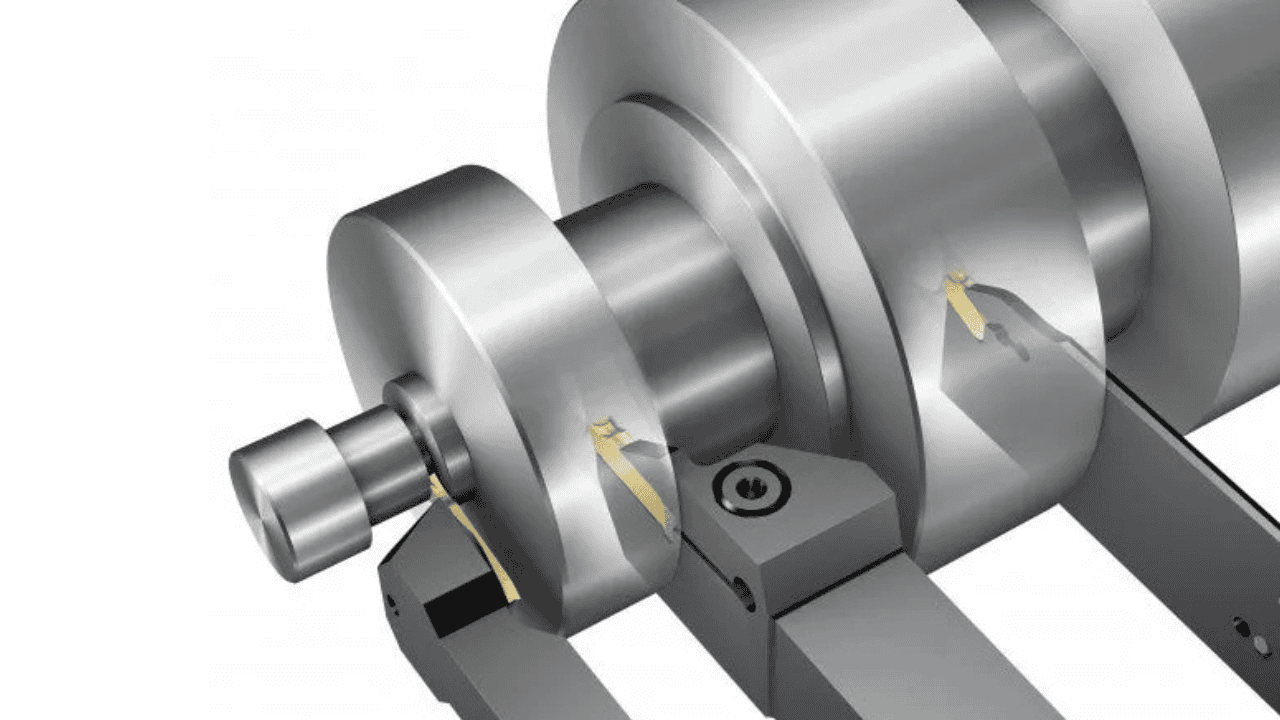
The process of creating narrow grooves in the surface of a metallic object by cutting them is termed metal grooving. The grooves can be either internal or external, radial, axial or face oriented depending on the design requirement of the component.
It is normally carried out on a CNC lathe, milling machine or special grooving machine with precision cutting tools. Today’s grooving solutions rely on the use of computer-controlled machining and advanced tooling systems to achieve uniformity of dimension and excellent surface finish.
The parts may also have grooves to fit seals, retaining rings, bearings, and other mechanical components. The success of an assembly will rely on the precision and quality of these grooves, many times.
why precision grooving is necessary for high performance.
Components that are able to perform under harsh conditions, such as extreme temperature, high load, high velocity, corrosive environment, etc., are called high-performance components. In any such applications, even slight dimensional inaccuracy may affect its performance and reliability.
Manufacturers can benefit from precision grooving to gain:
- Fit and alignment is accurate and correct.
- Enhanced sealing performance
- Improved structural integrity
- Reduced mechanical wear
- Increased operational efficiency
Grooves being manufactured to exact specifications ensure a more efficient part operation and reliability for a much longer time.
Advanced Metal Grooving Solutions
CNC Grooving Technology
In such systems, manufacture of complex groove shapes with tight tolerances and uniformity over large production runs is possible. CNC grooving is especially beneficial for sectors where accuracy and repeatability are crucial.
High-Performance Cutting Tools
Many of the factors that determine the quality of a grooving operation depend on the quality of the cutting tools. Today, grooving inserts are made of high-quality materials like carbide, ceramic, and coated alloys, with a higher wear resistance and durability.
These tools allow for faster cut rates, longer tool life and better surface finishes for manufacturers to get the best results at the lowest cost.
Multi-Function Tooling Systems
Many manufacturers are now using multi-function tooling that can be used to perform grooving, turning and threading in one set up. This reduces machine downtime, increase productivity and increase dimensional accuracy.
This helps reduce the number of tool changes and movements, simplifying production processes and ensuring high-quality results.
Metal Grooving Solutions offer a range of benefits,
Enhanced Component Performance
Grooves are an essential part of mechanical systems for specific functions. These can be used to house seals, allow lubrication and enhance load distribution. Well-designed grooves can make a significant difference in the product’s performance and efficiency.
Superior Sealing Capabilities
This is particularly crucial in hydraulic, pneumatic and fluid handling situations where a failure can cause expensive downtime.
Increased Product Reliability
Correct grooving reduces stress concentrations and ensures correct interaction between the components. This means that products are subjected to less wear and tear, resulting in more durable service life and less maintenance.
Improved Manufacturing Efficiency
Manufacturers can achieve high precision and reduce production time with the help of a modern grooving solution. Automated systems, innovative tools, and optimized machining techniques boost productivity and reduce production expenses.
Consistent Quality
Repeatability is one of the most important benefits of a highperformance grooving solution. From producing a single prototype to thousands of components, manufacturers can maintain dimensional and surface accuracy throughout the manufacturing process.
The high-performance industries
Aerospace Engineering
The aerospace sector requires parts that are able to handle harsh environments and strict tolerances. Turbine engines, hydraulic systems, landing gear assemblies, and structures are all common applications of metal grooving.
Precision grooves increase sealing performance, minimize vibration and increase overall system reliability.
Automotive Manufacturing
There are many parts in the vehicles today that have grooves, such as parts of the transmission, engine, suspension, and braking assemblies. Metal grooving helps to ensure efficiency, durability and safety.
Precision grooving will continue to play a crucial role in the production of battery systems, electric motors, and drivetrain parts as EV production increases.
Medical Device Production
Precision and reliability are key to medical equipment. Typical applications of grooving solutions include surgical instruments, implantable and diagnostic devices, and fluid management applications.
These grooves can directly affect the functions of the device and patient safety as well.
Energy and Power Generation
The high temperatures and pressures under which power generation equipment works. The use of grooved components in turbines, valves, pumps, and heat exchangers enhances performance and reliability.
Industrial Machinery
Grooved parts play a critical role in industrial equipment for bearings, gears, seals, rotating parts etc. Precision grooving can help to ensure smooth running and minimize downtime from mechanical failures.
The factors that affect the successful grooving operation:
Material Selection
Various metals need a variety of machining techniques. Each material presents different issues, including aluminum, stainless steel, titanium and hardened alloys.
Choosing the right cutting tool and setting up the machine is crucial for getting a good groove and wear-free tool.
Cutting speed and feed rate
Optimization of cutting performance when using proper cutting speeds and feeding rates. If the speed is too high, too much heat can be produced and can cause rapid tool wear, and if the speed is too low, it will lead to a reduction of productivity.
It is essential to get the right balance to get efficient material removal and best surface quality.
Tool Geometry
Groove shape and design have a significant influence on groove. There are inserts for various groove widths, depth and profiles.
The proper tool geometry allows to get better chip control, decrease the vibration and get the right size.
Machine Stability
It is important to pay special attention to stable machining conditions when creating accurate grooves.
New Metal Grooving Solutions Are On The Horizon
Technological advancements and automation are driving the future of metal grooving.
In addition, improvements in cutting tool materials and coatings are continuing to increase the machining possibilities and will allow manufacturers to continue to process the harder materials with even greater precision.
The need for more complex, higher performance components will drive continuous improvement of the grooving technology.
Conclusion
In the manufacturing of high-performance components, the demands of today’s industries are demanding the use of metal grooving solutions. Manufacturers can design functional features, create tight seals, and boost product reliability by developing the precise grooves and channels.
These solutions help to enhance the quality of the components and also help to increase productivity and reduce costs.
With the ongoing development of manufacturing technology, the metal grooving will still be indispensable process for meeting the precision, durability and performance required in the most demanding applications today.