










Introduction
In recent years, the logistics sector has undergone major changes. Over the last decade, the complexity of supply chains, coupled with the growing demand for more complex end-to-end logistics solutions from customers, is placing a growing demand on third party logistics (3PL) providers to perform more efficiently and still make a profit.
Older billing approaches tend to be based on manual techniques, spreadsheets, and flat-rate pricing. Today, 3pl billing providers need to use billing systems that are accurate, transparent, scalable, and recovers all billable costs.
Modern 3pl billing invoice and cost recovery strategies are all about automation, real-time integration, comprehensive tracking, and future-proofing the revenue stream. These measures can help logistics companies minimize billing inaccuracies, enhance customer satisfaction, and optimize profits.
Understanding the Importance of 3PL Billing
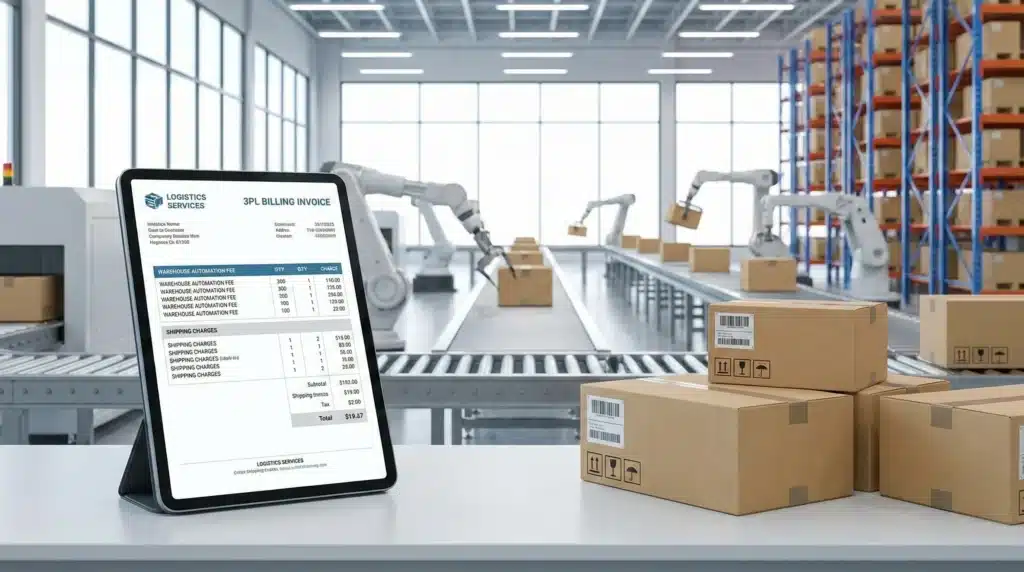
3PL billing refers to the procedure used to bill customers for logistics services the third party logistics (3PL) company provides. These can involve warehousing, order fulfillment, inventory, transportation, value-added services and returns processing.
The accurate billing is very important as it directly relates to the generation of revenue. Slight inaccuracies in billing can cause huge monetary losses in the long run. Underbilling leads to a loss of profit, while overbilling may lead to problems and customer dissatisfaction.
It also gives the customer a clear understanding of the charges that are being levied on them, thereby fostering trust and long-term relationships.
The limitations of the traditional billing systems.
However, there are still many logistics businesses that are still using outdated billing methods that cause inefficiencies in their systems and revenue leakage.
Some of the common issues involved in this:
Manual Data Entry
Manual billing systems have a higher risk of error.
Complex Pricing Structures
Many modern logistics contracts have several prices, storage fees, handling fees and transportation fees, as well as special service fees. These controls can be very labor intensive to manage.
Revenue Leakage
If companies do not correctly record the billable activities they are missing out on some funds. If the wrong amount is charged but is small in number, it can add up to a significant loss.
Billing Delays
Paper invoicing can lead to longer payment cycles, affecting cash flow and revenue collection.
These trials underscore the necessity for more sophisticated and technologically advanced billing solution.
The value of Automation for more accurate business operations.
One of the best ways to improve the 3PL billing process is through automation.
Today’s warehouse management systems (WMS), transportation management systems (TMS), and billing platforms can automate warehouse operations, and turn those operations into billable transactions.
For instance, all activities recorded in real time when inventory is received, stored, picked, packed, and shipped. Afterwards, these records are related to pre-defined customers’ contracts and price rules.
There are a number of advantages to automation:
- Reduced manual workload
- Improved billing accuracy
- Faster invoice generation
- Lower administrative costs
- Enhanced scalability
Automated billing systems are capable of managing more transactions without needing extra resources as logistics operations expand.
Real-Time Data Integration,
Real-time data integration is one of the hallmarks of modern 3PL billing.
In today’s logistics environment, vast amounts of operational data are generated. If the systems are directly integrated, then every transaction is immediately visible when the billing systems are linked to the warehouse and transportation systems.
Real-time integration enables logistics players to:
- Record billable events on the spot.
- Ensure that services are used at all times
- Quickly recognize missing charges
- Create accurate invoices in less time.
- Improve financial forecasting
Transparency is another advantage to customers. There are a number of providers that now supply client gateways where the client can view the customer activities and billing information prior to the time of the invoice being sent.
Accurate cost of activity-based billing.
Traditional pricing models for logistics services are based on flat rates, which do not always accurately account for the costs associated with the services. This means that providers can unwittingly be incurring costs that should be charged up to the consumer.
An activity-based billing is a more accurate solution.
This model charges the customer in relation to the services they consume. Examples include:
- Receiving inventory
- Pallet storage
- Pick up & pack services
- Labeling
- Kitting
- Returns processing
- Transportation management
Activity-based billing also helps to ensure fairness since customers pay only for what they use.
Preventing Revenue Leakage
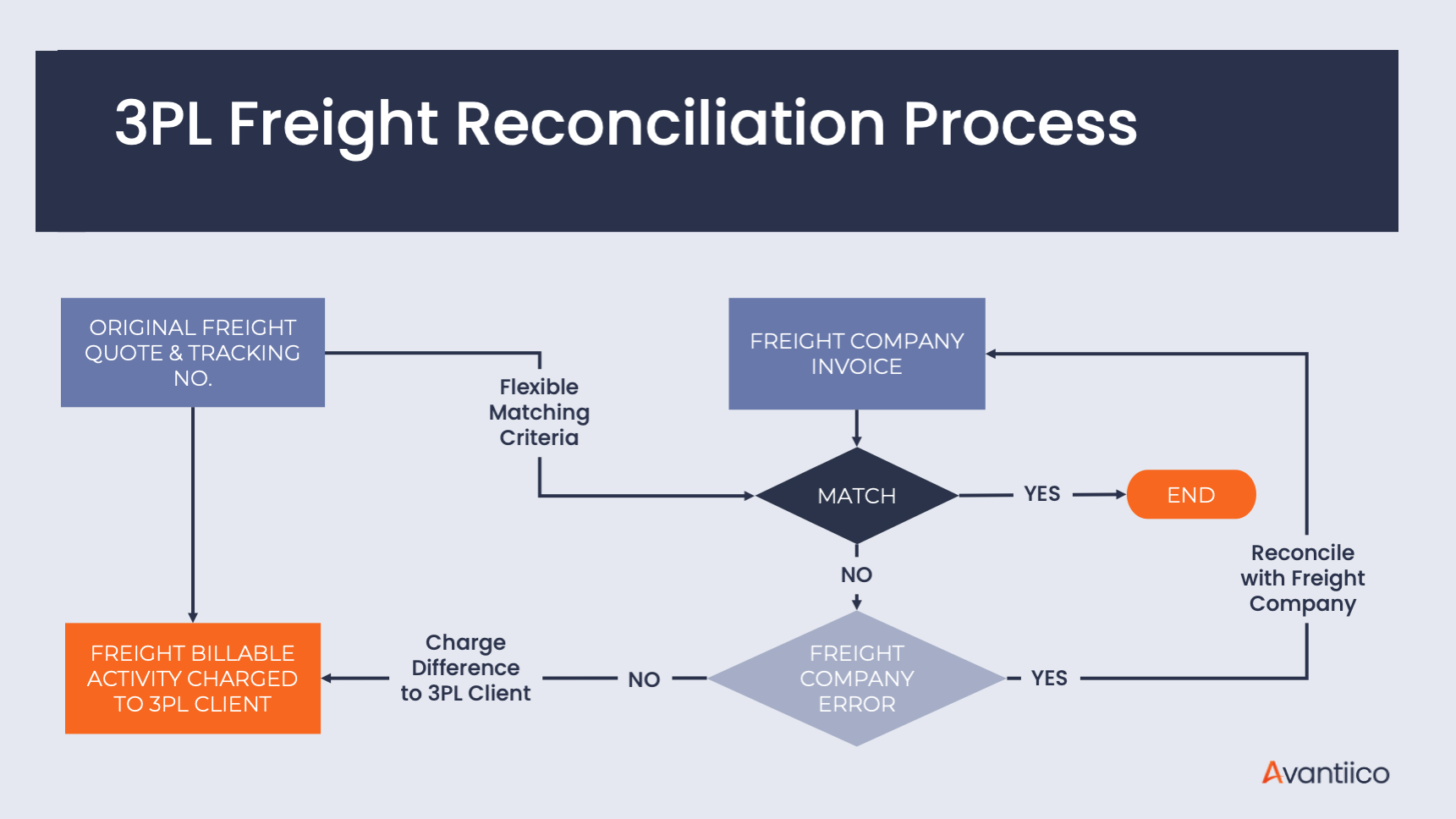
When billable services are provided but not billed. This may occur because of system restrictions, human error or incomplete operating logs.
The following are key practices:
Regular Billing Audits
Regular audits can detect unrecorded charges, discrepancies in pricing, and inefficiencies in the process.
Exception Reporting
These controls can help 3PL companies to greatly boost their revenue recovery rate.
To enhance financial performance with Analytics
The modern platforms offer a wealth of information about the profitability of customers, the use of services, billing trends, and operational costs.
Analytics can assist in answering some of the following critical questions:
- What are the highest profit customer segments?
- What are the services that are under-costed?
- What are the most common billing errors?
- What are the biggest costs associated with their operations?
Management teams can leverage this information to make well-informed pricing decisions and fine-tune their service offerings.
Building Customer Relationships based on transparency.
The logistics industry is a fiercely competitive landscape, and transparency in billing is a crucial issue.
It’s important that customers understand what is being charged on each bill. Confusion with invoices can cause disputes, payment delays and poor business relations.
Modern billing platforms enhance transparency by offering the following features:
- Detailed invoice breakdowns
- Real-time service records
- Online billing portals
- Automated reporting
- Contract-based charge validation
The more customers know about what they are paying for, the more trust they will have and the less disputes will there be.
It also makes the logistics provider a trusted and professional business partner as far as transparency of billing is concerned.
Planning for Growth in the Future
In parallel to the logistics operations, the complexity of the bills increases. More billing variables are added with new customers, extra warehouses, international shipping, and value-added services.
For long term growth, there is a need for a scalable billing infrastructure.
In today’s world, cloud billing solutions provide flexibility, automation, and integration options that enable providers to keep up with evolving business needs.
These platforms can readily fit:
- New pricing models
- Multiple customer contracts
- Additional service offerings
- Global operations
- Higher transaction volumes
Today’s investment in scalable billing technologies is a way to prevent expensive system restrictions in the future.
Conclusion
3PL billing has come a long way from merely creating an invoice. Billing is a vital part of logistics operations, revenue management and customer satisfaction, in today’s context.
Moderate solution for 3PL billing and cost recovery is automation, real-time data integration, activity-based pricing, analytics and transparency. These strategies help logistics providers to record all billable activities, reduce revenue loss, boost business profitability, and build customer relationships.
The challenge for companies facing increasingly complex supply chains is to remain profitable and ensure sustainable growth – and those that invest in advanced billing process and technology will be more likely to meet that goal.