











Introduction
Adidas swot analysis is among the most renowned sporting goods companies across the globe. The brand is famous for its three-stripe design and has become a leader in the sports industry with sneakers, sportswear, and accessories. Adolescere was founded in Germany in 1949 by Adolf Dassler and has become a multinational company with activities in over 160 countries.
Even when the sportswear industry is very competitive, Adidas SWOT Analysis has managed to remain one of the leaders worldwide due to its innovative ideas, effective branding and good business decisions. The most effective method for evaluating the company’s position is by means of a SWOT analysis that looks at a company’s Strengths, Weaknesses, Opportunities and Threats.
This article traces the way in which Adidas is applying its competitive edge to ensure its continued success in an ever-evolving global market.
Understanding SWOT Analysis
SWOT analysis is a business planning tool which enables organisations to analyse the external and internal environment.
Strengths are the internal attributes that enable a company to have an advantage over its competitors.
- Internal factors that could hinder growth are weaknesses.
- Opportunities – external conditions that can lead to success in the future.
- Threats are external issues which may impact on business operations.
Adidas SWOT Analysis for Adidas can provide valuable insights for a global corporation in terms of sustaining its dominant position in the market.
Strengths of Adidas
Powerful Global Brand Image
Adidas SWOT Analysis has a long history and reputation spanning decades. Its logo is well known around the world and symbolizes quality, performance and style. The company attracts pro athletes, fitness buffs and fashion-forward consumers.
Adidas establishes an enviable place in the market with a strong brand image, which in turn attracts loyal customers.
Diverse Product Range
Adidas’s biggest asset is its extensive product line. The company manufactures:
- Athletic footwear
- Sports apparel
- Lifestyle clothing
- Training equipment
- Fashion accessories
This diversification provides Adidas with low levels of business risks as it caters to different segments of customers.
Role of strong marketing and celebrity partnerships.
Adidas SWOT Analysis knows how to market through sports stars, sports teams, musicians and fashion designers. Such partnerships boost brand exposure and reach younger demographics.
Sponsorships of large sporting events further help to bolster the company’s international reach.
Strategic innovation and product development.
As a part of the success of Adidas, innovation has a big role to play. The company puts significant resources into research and development, to enhance the performance of their products and satisfy their customers.
Adidas uses cutting edge shoe technology, light weight materials and contemporary styles to remain competitive in the global sportswear market. Global distribution network to ensure that they reach a wide audience.
Adidas products are sold via company shops, internet, retail shops, and franchise shops. The wide distribution system allows the customers to easily buy the products in almost every corner of the globe.
Weaknesses of Adidas
The need for outsourced manufacturing.Reliance on outsourcing manufacturing.
Adidas is mainly produced by third party manufacturers, mostly in Asia. Outsourcing is cost saving, but can also have supply chain issues.
Political problems, labour problems, and transportation problems can impact production schedules and product availability.
High Product Prices
There are a number of Adidas products that are put as top class goods. While preferable for the brand’s image, the price may deter the budget-conscious consumer who opt for the less expensive option.
Intense Industry Competition
The sportwear business sector is a competitive sector. Adidas has to invest in advertising, innovation and product development continuously to sustain the market share.
With ongoing competition, there is a strain on profitability and operational expenses.
Counterfeit Products
Trading fake Adidas goods is a big issue in numerous nations. The risk of selling a product that is counterfeit is a direct consequence of harming the company’s image and the loss of money on real products sold.
To prevent product piracy, you need to constantly track the activity and take legal action.
A reliance on fashion trends
There is close relationship between sportswear and fashion. Consumer tastes can fluctuate rapidly, so Adidas needs to be ready to conform to new fashion and market needs.
If they don’t take note of the shifts, it could impact sales growth.
Opportunities for Adidas
Expansion of E-Commerce
The ecommerce trend is undeniably increasing across the globe, which is a great opportunity for Adidas. The company can boost profits and customer relationships as it enhances its digital platforms and direct-to-consumer approach.
A personalised shopping experience and mobile apps can further boost online sales.
Growth in Emerging Markets
There’s a great opportunity for growth in developing economies. With the rise in income, people are interested in sports and fitness so as a result, there is a demand for quality sports products.
Adidas can reinforce their position by establishing new stores and marketing campaigns within the city.
Greater demand for sustainable products
Consumers are becoming more eco conscious. Adidas SWOT Analysis has already come out with garments produced from recycled materials and eco-friendly production processes.
Growing sustainable product lines can enhance the company’s image and appeal to eco-conscientious customers.
A growing passion for health and fitness
Consuming more nutritious food is becoming a global trend. There is strong demand for athletic footwear and clothing, as gyms, running/bicycling and outdoor sports are becoming more popular.
Adidas can capitalise on this trend by developing specialised products for different fitness activities.
Technological Innovation
With the new technology of manufacturing and the digital design, Adidas has the chance to improve the efficiency and quality of their product.
Smart wearables and performance enhancing sports goods are likely to be growth sectors in the future.
- Threats Facing Adidas
- Strong Global Competition
There are a number of strong sportswear brands in the international and regional markets which are all vying for the same customer base. Aggressive marketing and pricing strategies from competitors can impact Adidas’s market share.
Economic Uncertainty
The economic downturn in the world can lead to a decrease in the spending of consumers on non-essential items. During inflation or recession, premium sportswear brands can see a slowdown in sales.
Supply Chain Disruptions
Production and distribution can be affected by international trade problems, transportation problems, and crises.
When there are disruptions in supply chain, it can lead to higher operating expenses and lower availability of products.
Consumers’ preferences are quickly changing.
The world of fashion and sports changes at a rapid pace. Consumers want new products and new designs. As long as Adidas doesn’t adapt, there are competitors that might get attention of the market.
Currency Exchange Risks
Adidas is a company that is multinational, which means that it will generate revenue in several different currencies. Changes in exchange rates may impact profits and financial stability.
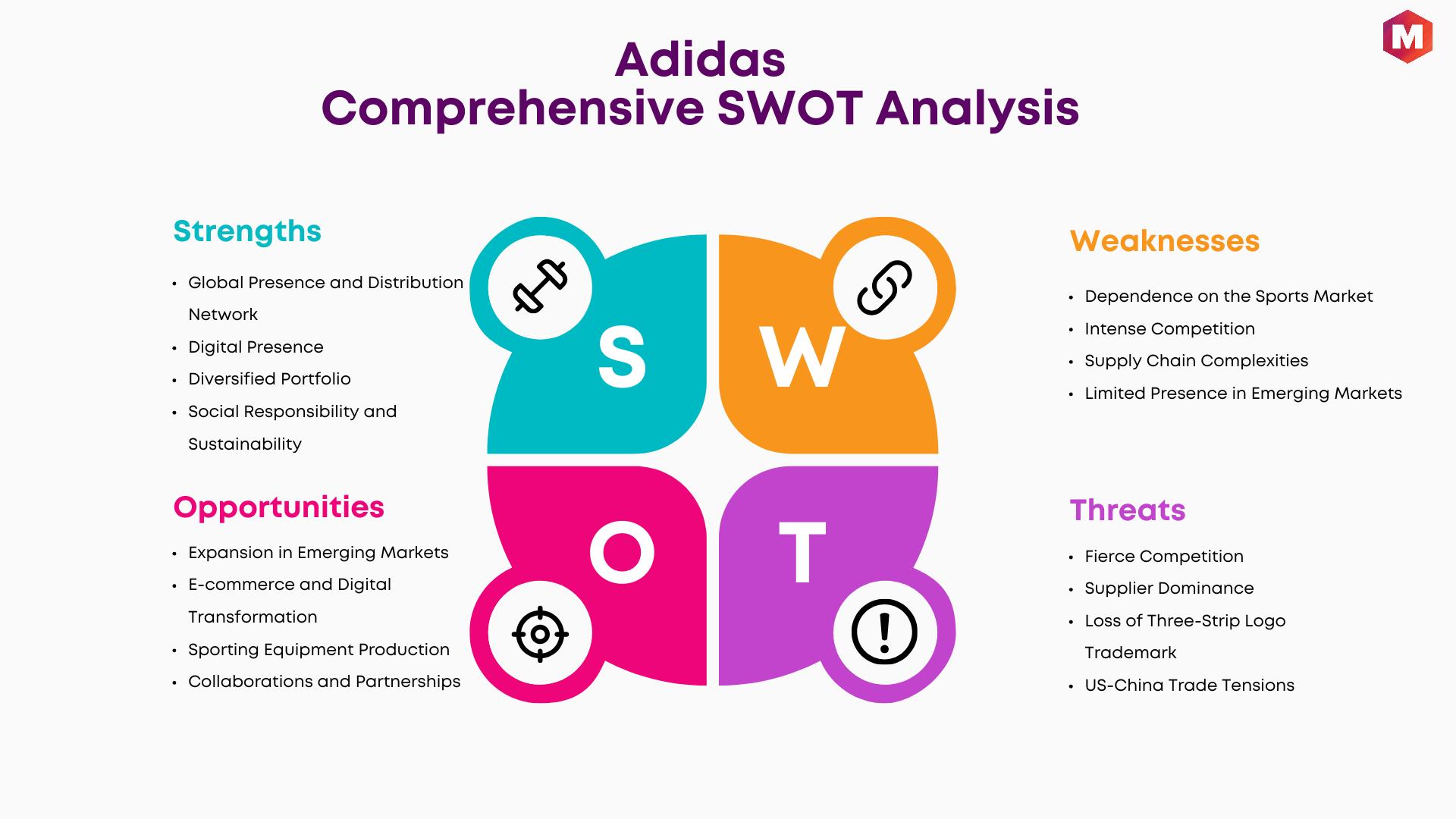
Explore how Adidas has retained its global leadership
Adidas SWOT Analysis has been a leader in the global market consistently adapting to changes. The company has a unique blend of innovation, strong branding and customer-oriented approaches to maintaining its competitive edge.
It has several key factors that support its leadership:
- Ongoing investment in research and development activities
- Robust developments in digital and e-commerce.
- Strategic partnerships and sponsorships.
- Commitment to sustainability
- Expansion globally to emerging markets
When it comes to creating a balance between performance, fashion and technology, Adidas is definitely doing it right.
Future Growth Strategies for Sustainable Growth.
Adidas can concentrate on the following to further consolidate its market position:
Strengthening Digital Transformation
Artificial Intelligence and online shopping platforms can be used to enhance customer experience and boost direct sales.
Expanding Sustainable Manufacturing
Environmental objectives can be achieved with the use of sustainable materials and minimizing carbon emissions.
Diversifying Supply Chains
De-densifying manufacturing can help to increase business sustainability.
Enhancing Product Innovation
Developing advanced sports technologies and smart products can help to keep Adidas ahead of the game.
Improving Customer Contact
Loyalty schemes, targeted marketing and social networking can help to bind customers to the brand internationally.
Conclusion
The SWOT analysis of Adidas SWOT Analysis provides a deeper understanding of the brand’s strengths and weaknesses, along with its opportunities and threats, illustrating why it continues to be one of the world’s top brands in the sportswear industry. It has a very good reputational advantage, innovative products, and marketing.
At the same time, Adidas must overcome challenges such as supply chain risks, intense competition, and changing consumer preferences. The company’s commitment to digital transformation, sustainability, and ongoing innovation will ensure that it maintains its market leadership and continues to grow.
The variety of Adidas’s adaptability and its dedication to quality and performance are the main reasons for its continued dominance in the international sportswear market.